M2M security is important but more importantly, how do we make money?

That’s the story of last night’s Mobile Monday in London. As with all marketing catchphrases, the panel struggled to properly define machine-to-machine (M2M), with one describing it as more machine-to-network. Accenture’s David Wood (@dw2) presented quite a pragmatic view stating that there are likely to be multiple different eco-systems of machines talking to other machines in specific industries. He pointed out that big incumbents would try to control the technology to the extent that the revenue continues heading their way which is something that would hinder development as it did with Smart Phones in the past. The prediction of a Smart Barbie drew some sniggers in the audience but it does seem that the toy industry are quite on the ball so they will almost definitely exploit this kind of technology.

A long list of applications from healthcare through to construction and industrial controls were brought forward by the presenters with Ericsson’s Tor Bjorn Minde (@ericssonlabs) predicting 50 billion devices by 2020. This is an incredible number but is probably realistic. The number of transducers around far exceeds that now. In my view what we are more likely to see is similar to existing Distributed Control Systems (DCS) which have been in industry for years (I was working with one back in 1996). The transducers are connected back to one host system for the plant in a private network. Looking into this today, I see that industrial control systems already use wireless networks, so we’re already into a healthy M2M world, it just isn’t branded as such by the marketing people. Let’s also not forget that the WiFi connected fridge and vacuum cleaner already exist, they’re just not mainstream yet. It will probably take NFC tags on every product in your fridge to make that a hassle-free, useful product that people want (automatic ordering, recipe creator etc.). I guess that’ll mean a new fridge in every home…

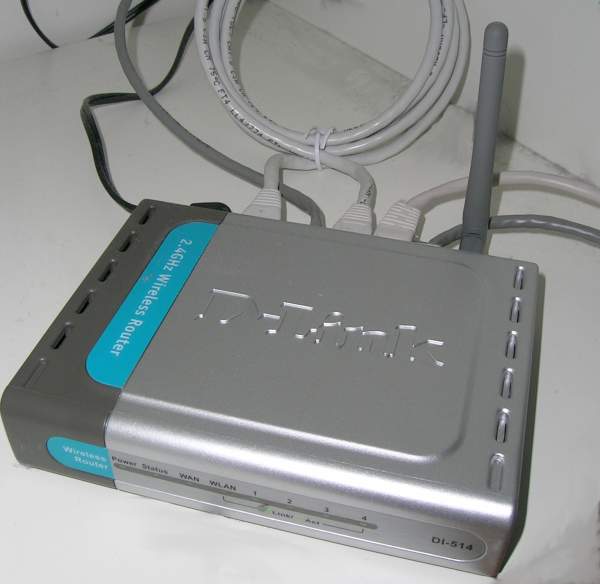
Adrian and Janet Quantock [CC-BY-SA-2.0 (www.creativecommons.org/licenses/by-sa/2.0)], via Wikimedia Commons

Dan Warren from the GSMA (@tmgb) talked about embedded SIM and how to prevent SIM cards being stolen from smart meters and traffic lights. He also raised an important point that “you don’t need to drive test a fridge” – mobility isn’t that important for a lot of M2M applications. William Webb from Neul suggested that using the white space spectrum in the UHF space (which is bigger than the WiFi band) could be an opportunity for low-power devices talking to each other.

Camille Mendler (@cmendler) mentioned that people wanted to know “is it safe?”. There was no real discussion of this but one of the panelists privately told me afterwards that they didn’t want to go anywhere near safety critical software for applications such as automotive. As I’ve previously discussed, there needs to be some real discussion on this in the mobile phone industry as it is a relatively new area for handset manufacturers and operators. Going back to DCS systems, being able to control a valve is co-dependent on the status of other transducers in the system such as flow sensors, hardware interlocks and non-return valves. This is absolutely critical because human error can often cause huge safety issues. In a DRAM fab, you don’t want to open a silane valve if you’ve not purged it with nitrogen first (Silane is pyrophoric and this specific example has killed people in explosions in fabs in the past). Now think about your own home – what would happen if you remotely turned the oven onto full but the gas didn’t light? Consumer goods are certified for safety (e.g. CE marking) but there will need to be new certifications in place for remote control, including that the embedded software is fit for purpose.

The big question on everyone’s lips was “who is going to make money?” and the answer didn’t seem forthcoming. On twitter, there was more talk of Arduino, which I blogged about the other day in relation to Android@Home. After my question about whether Google could be in a position to clean up here, the panel dismissed this a little bit stating that this was what everyone used to say about Microsoft. It may have been that the panel hadn’t seen the announcements at Google I/O but I do see this as a real possibility.

All the panelists mentioned security as being paramount but didn’t elaborate on it with David Wood saying that “security issues will bite us”. I think that hits the nail on the head but the audience nodding in agreement seemed to me like lemmings heading forward towards the cliff “because there’s money to be made!”.

One attendee didn’t like the idea of being tracked around the supermarket and questioned privacy. Again, the concerned faces and “yes that is a challenge” response. “Yes but think about the nectar points!” I hear them cry.

So in summary, I think the really big issues are safety and security and there could be some serious money to be made out of looking at those issues – existing M2M installations are already under attack. A lot of people seem to be glossing over those issues in favour of the money to be made. There’ll be lots of sensors out there reporting to create the ‘internet of things’ that developers crave, but the interesting stuff should and will be firewalled and secured and ultimately heavily tested and regulated.

Android@Home – Now I’ll hack your house (part 2)

So in part one I introduced some of the reasons why home control hasn’t been a mass-market success, here I’ll discuss some of the potential uses and then cover some security points.

Uses of Home Control

To get your minds in gear, I’ve listed out some possible (and existing uses of home control). The idea of Android@Home will be to bring all this together. I’m guessing people are going to need to buy more network switches in their homes!

  • Curtain and window blind control
  • Electrical outlet control (timers and on/off)
  • TV control
  • Lighting control
  • Home CCTV
  • Burglar alarm
  • Motion sensors
  • Child monitoring
  • Garden lights
  • Pond waterfall and fountain pumps
  • Bath level monitors
  • Home cinemas
  • Thermostats and heating
  • Smart meters
  • White goods monitoring and control (fridges, cookers, washing machines etc.)
  • Doorbells

By Google open-sourcing the platform, this creates a defacto standard for people to kick-start the home control industry. If you look a bit deeper, the technology is a combination of a wireless protocol from Google and a hardware Accessory Developer Kit based on Arduino which means you can access USB devices too. Their software project is on Google Code . Arduino also have a ‘lilypad’ range  for wearable applications. This could even further extend the applications for Android@Home. There are some interesting Arduino projects around, including a combination door lock. I can see how Near Field Communication (NFC), touch tech fits into all of this, but not so much machine-to-machine (M2M) technology, but in theory it could easily be interfaced. The real cleverness in all of this will be in mashing up the data and applications – mood lighting for music, intelligent context based decision making – e.g. I am the only person in the house so switch to home monitor mode when I leave. I believe this will fly because home control has been quite a popular geek project with various methods tried by people such as PSP home controllers.

Security

Clearly, this technology is a hugely attractive target to hackers, good and bad. Being able to find out what your neighbours are up to is going to mean there is a generic consumer market for attacking these systems. This is bad news for your home network.

 
“you are relying on the developer to get it right”
 

Existing problems with Android Market come down to malicious software that has slipped through and plain old bad coding from developers. With home control solutions, you are relying on the developer to get it right. Not only for security, but also for safety. This is an untested area so is probably not completely covered by regulation but I would certainly be worried about my oven accidentally over-cooking something by 12 hours. Many of the goods that are produced with wireless control are going to have their own local safety interlocks but an intentional malicious attack or exploit to vulnerabilities with particular manufacturers could cause chaos. Suddenly your house has become part of critical national infrastructure! Imagine an attacker turning everything on in every house in the UK that was connected? It could easily bring down the national grid. The existence of a botnet of houses could be used to blackmail governments. Wireless, device and perimeter security are the main issues that need to be considered. A lot of this technology is built around the web, which in my view is simply not secure, nor web-runtimes robust enough for these kinds of critical applications.

At a much lower level, if burglars could remotely access your home control system, they could shut off all your security and lights enabling a much easier burglary. Conversely, it can be argued that the user is in much more control, so if their house is burgled in the middle of the day (the majority are), the user can be alerted immediately. This in itself may not be enough to prevent the burglary, but the simple fact that this function exists increases the chance of the burglar being caught. The deterrent that this creates could actually reduce burglary.

One other low level crime which could increase is handset theft. More people lose phones than have them stolen, but by putting home control onto the phone (perhaps it’s an NFC lock to the house too), you are making the user much more of a target.

I could go on and talk about other things such as further loss of privacy – think about the mountain of data Google will be sat on about your habits. There are some other projects which are studying this area – the internet of things. The EU-funded webinos project is also looking at the dangers of connecting real, physical things to the internet and how that can be secured, it’ll be an interesting one to watch. Wait for Google to make their next move in this space – automotive.

Android@Home – Now I’ll hack your house (part 1)

Very exciting news from Google I/O in San Francisco. Android@Home has been announced, a logical move and one which I would wager will be highly successful. With Google TV set to emerge in homes this year and a plan by Google to merge their phone, tablet and Google TV code into one build codenamed “Ice Cream Sandwich” at the end of the year, the company seem well positioned to take on home control. Google TV offers users the ability to control their TV from their Android phone amongst plenty of other features. This basic feature, to use your phone as a remote control for the TV has been something that users have been crying out for for years, with nobody paying any real attention to it. I do remember a great program called Nevo on the iPAQ on which you could control masses of IR equipment. I gained much amusement from changing the TV in the pub and works canteen to the confusion of the staff there.

Cost, Complexity and Fragmentation

Yet home control has never really caught-on. I put this down to a number of factors (which the mobile industry is well used to hearing): fragmentation, cost and complexity. The three factors have combined so far to prevent the market maturing in any sensible way. Yes, there are home control systems out there, but they are all pretty much proprietary. I’ve been considering whether to do some home control for years but the components are over-priced and I can’t interface with them with my own software. Take the example of a remote controlled socket kit from the UK’s B&Q or the control for remote lighting . Everything needs its own remote control. We want to use our mobiles! No doubt this is true of the designers and manufacturers of these products too, which is why I think Android@Home is going to be a roaring success. Others such as Bose may continue to sell the whole integrated system, continuing to target the niche high-end market but ultimately market forces will probably force them to ditch their proprietary system.

Setting up IP cameras in your home now also involves putting some software on your PC. A lot of users have switched to much better open source solutions such as iSpy just because of the poor quality and complexity of the setup of the proprietary (or badged) PC software.

So, in summary, as a normal person I don’t want to pay loads of money, I don’t want it to be difficult to setup and I want to run everything from the same software on my mobile phone.

In part 2, I will discuss some of the uses and why security is critical.


UMA – Unsafe Mobile Access?

I’ve been following Mobile Monday’s London chapter for a few years now and I know a few of the guys there, but I’ve never been able to get down to one of their events. I finally made it down to the April 2010 demo night and was suitably impressed by the number of attendees and the quality of the short 3 minute lightning presentations. I thought that I’d put a security spin on what I witnessed but ended up writing this blog on one particular presentation about ‘Smart Wi-Fi’.

Mark Powell from kineto.com talked about offloading data to wifi from the mobile. Increases in data traffic have caused some big headaches for operators, so this is clearly an attractive proposition for them. It is pre-loaded on some devices, partly because there are some custom APIs involved. It uses 3GPP GAN (Generic Access Network) as the underlying technology to get access to the mobile network and is also known under UMA (Unlicensed Mobile Access). Kind of like a ‘soft’ femtocell (I might even go as far as to say a potential femtocell killer). This is being marketed by T-Mobile as ‘Wi-Fi calling’ and Orange as ‘signal boost’. You’re going to get charged for your normal call on top of your broadband fee, but in general the benefits of having a better signal in the house is probably going to be quite attractive to people and may become a standard offering in the future. Kineto also explained that it helps avoid international roaming because once going Wi-Fi it will be just as if you’re in your home country.

As a paranoid security person, I always get a bit concerned when operators rush to a new technology to solve their problems (in this case network load). Converged technologies bring completely new threat scenarios which can re-enable old attacks with new vectors for achieving them. From a security point of view – there are some pretty obvious initial questions that spring to mind:

  • What if you’re connected to a rogue router? Is any of my data going to be compromised?
  • Is a man-in-the-middle (MITM) attack possible on the access point?
  • Can fraud take place?

I searched around and found an interesting whitepaper from Motorola, produced back in 2006 which describes some high level threat scenarios: UMA Security – Beyond Technology . I also found Martin Eriksson’s thesis Security in Unlicensed Mobile Access . This states that the IMSI (International Mobile Subscriber Identity) is not secured well enough, leading to exposure of the subscriber who is attached to the router and therefore their physical location. Note that the thesis was written in 2005 and very much plays this issue down – in 2011 most readers would take a different view on this privacy breach. Issues with authentication and the potential for a MITM attack via the router allowing (fraudulent) free calls for other users of the access point all also seem to be areas of concern as the router would be open to data sniffing (particularly if it is a rogue access point in the first place). The problem here lies in the fact that the user is connecting to a less-trusted component than the normal mobile network, leaving them open to all sorts of potential attacks and manipulation.

Putting expensive hardware security into routers is not something I’ve seen and is difficult to protect – the problems with mobile device security often stem from the fact that you’re putting the device in the hands of your attacker to tamper and play with. There is already a healthy community for router hacking and modification around too such as DD-WRT .

UMA applications on phones need to use shared secrets which are stored on the UICC. It would be interesting to analyse how well protected this data is on the device and whether it would be possible to snatch that data or even whether other attacks could be created on the UICC.

Although some of the issues here may have been addressed by the mobile industry, it seems that UMA could be a bit of a risk for users. (I’d welcome any comments or updates by the way from those in the know). The technology is probably safe at the moment as it is in its infancy and hasn’t crossed the radar of most of the hacking community. However, I for one, will be steering clear for now.

Confused Users and Insecure Platforms – the Perfect Storm Approaches

(picture from: http://commons.wikimedia.org/wiki/File:Storm_Approaching_Anna_Bay.JPG)
 

The evolution of hacking against mobile devices has been as rapid as the evolution of the device technology itself. Traditionally, mobile phone hacking has centred around the ‘embedded’ part of the phone, that is the electronic hardware. The software and firmware within the device was proprietary to that particular manufacturer so hackers and hacking groups specialised in a particular area. The knowledge and expertise needed to crack devices was very high and technically complex. As a result, it was difficult to understand and even though there was a large grey and black market centred around SIMlock removal and IMEI number changing, the media didn’t ever report it. Large amounts of money were made with lots of this going directly up the chain to the top. As the hacking technology developed, protection techniques were established in order to ensure that the revenue chain was always going back to the originator of the tool. To the ordinary user, they just knew that they could take their handset to a market and get it unlocked. The perception was that hacking a phone was easy.

The first real main-stream attention that embedded hacking got was around the iPhone. Existing mainstream hardware hacking groups had been involved in assisting George Hotz, a 17 year old at the time to create a hardware crack which would enable the removal of the SIMlock and ‘jailbreak’ the device, allowing non-Apple approved applications to be installed.

The public perception of hacking is extremely confused. The recent “phone hacking” scandal in the UK was really unauthorised access to voicemails on the servers of the mobile operators. Users don’t really understand where they are with regard to their own phone security or what they need to do. The anti-virus vendors in particular are responsible for sabre-rattling with respect to the threat to mobile devices. They have repeatedly declared “20xx” (choose a year) as “the year of the mobile virus”. This is simply false and shows a complete lack of understanding of the technologies involved. Indeed in 2004 one anti-virus solution completely filled the application memory of a phone such that no other application could be installed. Perfect protection then! There has been no mass malware outbreak to-date. The only ‘major’ incident was various variants of ‘commwarrior’ which was an MMS virus which propagated via users’ phonebooks. The anti-virus vendors have now been so discredited in the mobile space that they have used up their opportunities for funding and convincing users that they need to purchase protection. Ironically, the year is upon us where anti-virus would provide real value-add to users.

The perfect storm is approaching. The unification of devices under common platforms such as Google’s Android, easy application and widget development on an insecure platform (the web) and weak application policy mechanisms (such as deferring key decisions on permissions to the user) are all leading users down a dangerous path. There are mitigating factors though. The inherited knowledge from the days of PC viruses has allowed the development of some good security defence technologies and processes. Apple, at one end of the scale has a very rigorous application inspection process, both automatically and manually, whereas Android’s is much more open and therefore open to attack by malware authors. Sideloading of non-digitally signed applications is also generally restricted. In early March 2011, DroidDream was identified in around 50 applications supplied by 3 developers to the Android Market. These applications were originally legitimate but had been cracked and dressed up as Trojan versions of the originals. They were only spotted because someone noticed that the author was different to the original. Immediate action was taken by Google to remove the apps and ban the developers, but the malware is still out in the field at the time of writing – an estimation of between 50,000 and 200,000 downloads for one of the applications is quite a severe incident. Other incidents that have taken place over the past couple of years include suspected phishing applications on Android, attempts at creating mobile botnets in China, malicious multi-part SMS messages which crash phones through to rogue ‘Hello Kitty’ wallpaper applications which suck out user data and upload them to IP addresses in China.

It is clear that hacking against mobile devices is a developing discipline. The fight seems to be being won in the hardware space, but much more work needs to be done to protect users in the application space – and now. And the bottom line for consumers? They just want to be secure, without any hassle.

The problem with facebook one-time passwords

I popped onto facebook this morning to see a former colleague @basexperience post the following:

‎#Facebook facerapers! Grab your friends’ phone and text “otp” to 32665 to get a password for their Facebook account for 20 mins!

Clearly, I was interested. I hadn’t really given much thought to the announcment made by facebook, but I assumed given the recent pressure on Facebook they would have thought about it a bit more.

Taking aside the obvious issues about the fact that most people will already be logged into facebook because their password has been ‘remembered’ (both mobile and desktop browsers), and, let’s not forget the fact that if you’ve got a facebook app on your phone you’re probably logged in too. Let’s put them to one side for a second.

So what facebook have basically done is create a mechanism for anyone to get into a facebook account by (in authentication terms) – “getting something you have”. That’s all. One factor authentication. If they added say a PIN – “something you know” – to the SMS you send to the short message number to get the one-time password that would at least prevent random people getting into your account if you leave your phone on your desk. I won’t go into some of the other issues about exactly how they’re identifying you – by your MSISDN? (phone number?)…

The more annoying thing for me about this is that it has happened before. In America. To a celebrity. To Paris Hilton no less (Register readers delight):

http://www.theregister.co.uk/2005/02/21/paris_hacked/ . In that case, the password provided was a reminder to access the backed-up photos and numbers etc. on the sidekick servers.

Coming back briefly to the ‘remembered’ passwords, to launch my attack today, this helped me as when you first go in you have to enable mobile access for that device by linking the MSISDN to the facebook account.

Thanks to my mate @basexperience for the post.

Questions to answer from private forensic companies

Chris Williams from The Register has published an article “Yorkshire cops accused of copyright theft”: http://www.theregister.co.uk/2009/07/14/fts_west_yorkshire/ . It seems that Steve Hirst, a policeman from West Yorkshire Police created some mobile handset forensic software and used some hexadecimal look-up tables from manuals provided by a private company, Forensic Telecommunications Services (FTS). These tables had been created from reverse engineering and extracting data from various manufacturers’ handsets. It looks like FTS have taken quite a heavy-handed approach and have taken Steve Hirst and West Yorkshire Police to the High Court.

Private forensic companies such as FTS make a lot of money out of police forces and security agencies around the world. They provide in-house services where handsets can be sent to them for analysis, including a full report of the findings or they will produce and sell their own forensic hardware and software.

Whilst West Yorkshire Police clearly seem to have put their foot in it with FTS, there are some bigger questions to answer about the forensic analysis of mobile handsets. Is it right to hack into handsets in order to reverse engineer the storage mechanisms? For example, Nokia’s e71 user manual clearly states the following:

Reverse engineering of any software in the Nokia device is prohibited to the extent permitted by applicable law.

So what are private forensic companies playing at? By reverse engineer manufacturer’s devices themselves they are in breach of manufacturers’ terms and conditions.

This subject goes a lot further than in-house reverse engineering and brings up the questionable use of hacking software and hardware purchased or downloaded from the Internet. What happens when data extracted from phones was performed using software that was purchased over the internet from organised criminals in Russia?

The Police need to go about their jobs in a challenging technical environment, but there is a clear need for oversight and regulation of private forensic companies and to reign-in cowboy practices which will inevitably cause miscarriages of justice.